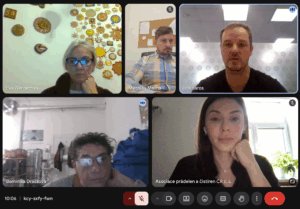
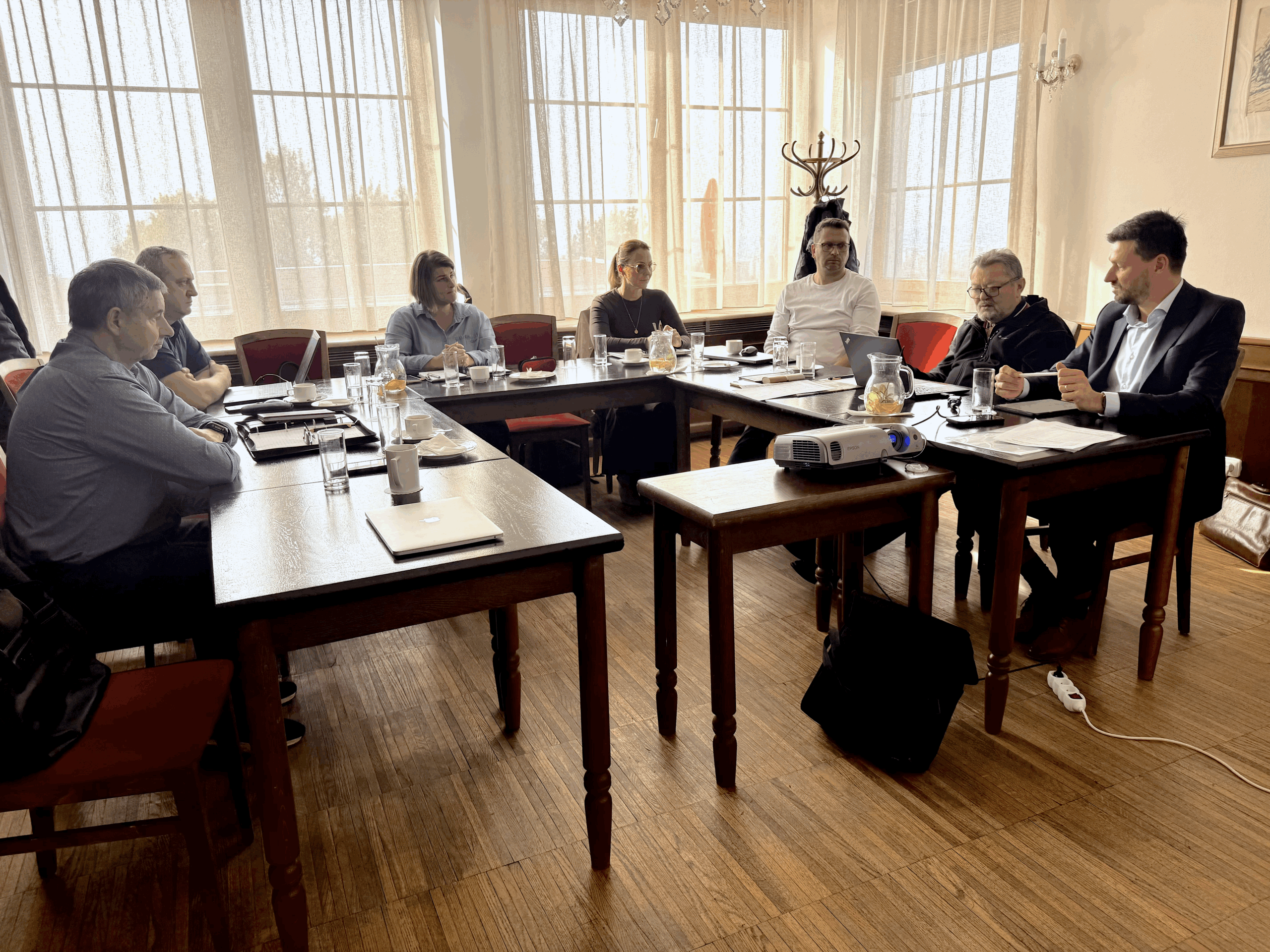
At the October meetings of the Committee for Small Laundries and Dry Cleaners and the Committee for Industrial Laundries, several topics were discussed that will be crucial for the industry in the next two years: extended producer responsibility (EPR) in textiles, requirements related to wastewater and microplastics, upcoming standards, and growing sustainability demands.
EPR: End-of-life management of rental textiles
The Czech Association for Textile Care is addressing Extended Producer Responsibility (EPR) in textiles – in other words, who carries the cost and responsibility for textiles at the end of their life cycle. This concerns mainly companies providing textile rental services (industrial, hotel, healthcare linen).
The Association will take part in the Ministry of the Environment’s working group for textiles and footwear and is also in consultation with the non-profit organisation “Změna k lepšímu” (“Change for the Better”). A meeting at the Ministry of the Environment will take place on 4 November, and an online consultation is scheduled for 11 November. The sector will be represented by Jan Chrištof, Martina Prošková, Daniel Palička and Monika Býmová.
Key questions include: who will be legally obliged to pay the “end-of-life” fee for textiles, how this will affect service pricing, how the system will be recorded and reported, and how to ensure that conditions are fair for all market players. It was also noted that many smaller cleaners do not simply “throw textiles away”: items are often repaired, repurposed or passed on for secondary use, so they are not automatically the final waste producer.
Regulatory burden: the Ministry of Industry’s “Eco-audit”
The Ministry of Industry and Trade has invited the sector to contribute to the so-called “Eco-audit”, which aims to identify and reduce unnecessary administrative and financial burdens arising from environmental legislation. The call was sent to all members.
Committee members openly stated that most of the environmental compliance in their companies is already handled by external specialists. They do not want additional paperwork and do not feel they are in a position to comment directly on legislative texts.
The discussion also covered upcoming changes to sewage and wastewater requirements. Members were encouraged to contact their local wastewater utility operators to clarify which new indicators (including microplastics) will be monitored and when. This has a direct impact on washing technology, water treatment and operating costs.
Standards and healthcare textiles
The Committee for Industrial Laundries reviewed the status of revisions to key industry standards. This includes in particular ČSN EN 14065 (biocontamination control system in the processing of textiles), where an updated version is expected to be available by the end of 2025. Another is OS 80-06 “Laundry for hotels and restaurants – Technical requirements”, which will be sent to the Association for comments after the current revision is completed. For ČSN EN 13795-1 (surgical gowns and drapes), the updated version is expected to be published as a harmonised and therefore binding standard. These standards define hygiene and quality requirements especially in healthcare and hospitality.
Regarding the planned amendment of Annex No. 5 to Decree No. 306/2012 Coll. (hygiene requirements in healthcare textile handling), the committee noted that comments were submitted to the Ministry of Health; the Ministry has indicated that, due to other priorities, the amendment is postponed to 2027.
Training and knowledge sharing
Members of the Committee for Small Laundries and Dry Cleaners evaluated the INTERCLEAN 2025 conference in Olomouc positively – in particular the venue, services, organisation and networking. For the next edition, they proposed new lecture topics: updated market data, routine hygiene/cleaning standards in laundries, and input from the Chamber of Commerce on how EU legislation is impacting day-to-day business.
The Association is also preparing further professional training: in November there will be a seminar on drycleaning practice and the care of leather and fur. The training plan for 2026 also includes a specialised session on stain removal.
In addition, the committee suggested adding site visits to large industrial laundries (e.g. Chrištof, Elis) so that smaller operators can see how modern large-scale plants are organised today. The idea is to link these visits with the European Open Laundry Day (23–27 March 2026) and newly allow participation not only for media and schools, but also for Association members themselves. The Czech Association for Textile Care intends to present this concept at European level (ETSA).
Priority topics for 2026
• wastewater quality monitoring (including microplastics),
• ESG reporting and data collection on water, energy, chemicals and workplace safety,
• packaging (pressure for reusable or deposit/return containers for detergents, higher cost of “eco” packaging),
• and the financial impact of EPR in textiles.
Next steps
The Committee for Small Laundries and Dry Cleaners intends to meet in person in 2026. A joint session with the Committee for Industrial Laundries is planned for Tuesday, 20 January 2026, in Brno. More information is available in the full minutes of the meetings in the members’ section HERE.
Czech Association for Textile Care